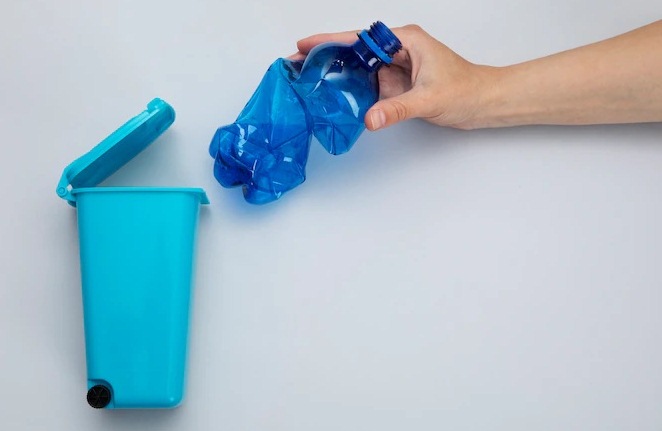
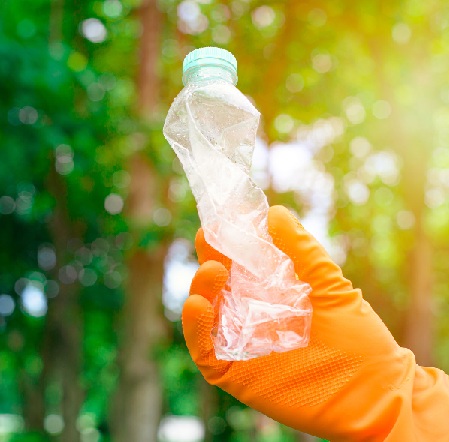
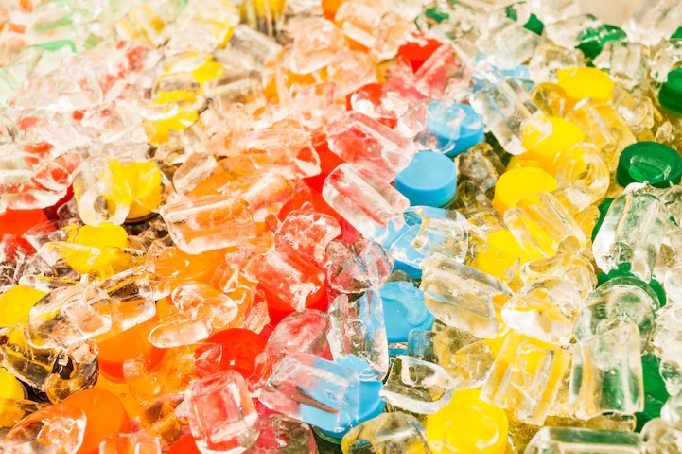
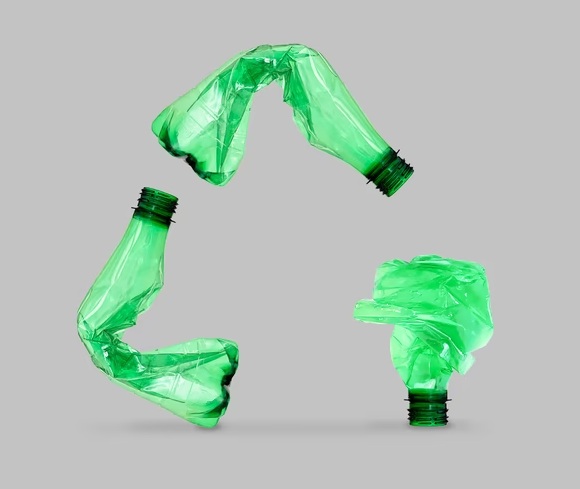
All the thermoplastic polymers which are used for making the bottles are 100% recyclable. The plastics such as PET & HDPE can be easily recycled simply by melting and molding.
… but it isn’t that simple.
…. in fact, plastic bottle recycling is way high challenging.
Yes, plastic bottles are 100% recyclable. But in practice, very few get actually recycled.
Globally, just one third bottles get recycled. Two of each three bottles pose problem to environment and society.
Plastic recycling is a lucrative business. But there are several challenges and community dependencies which reduce extent of the feasible recycling.
Bottles contain >95% air
Plastic bottles are made to contain liquids. After dispensing the content, the void remains inside the bottle.
Even if crushed, the bottles has more than 50% air.
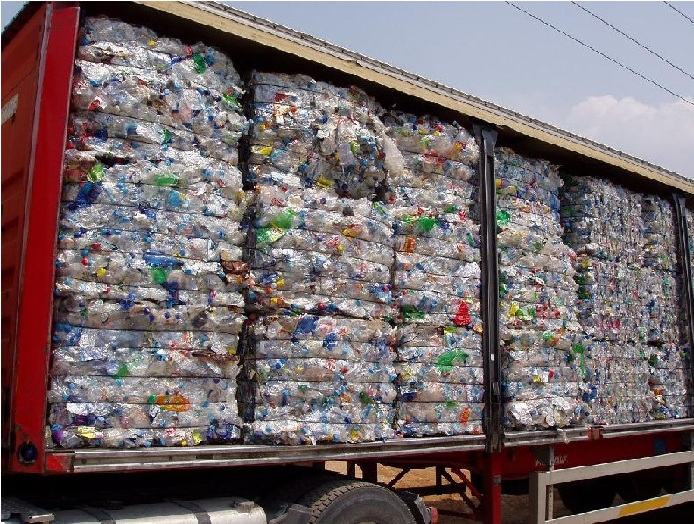
Such amount of air/voids takes significant space and make handling & transport difficult.
Just 1kg bottles fill a gunny bag
Air makes the waste bulky
Handling of bulky waste diminishes scrap value
No consumer takes bottles to scrap/recycler
Collection is challenging
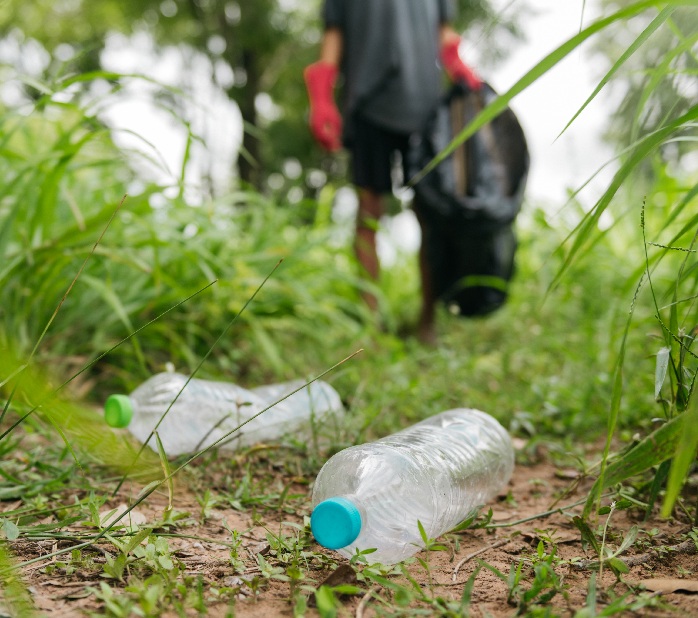
Bottles are dumped in the garbage bin. Upon such dumping, the sorting and collection needs much efforts & money.
No dedicated bin for bottles
Picking bottles from trash is tricky
Bulky waste resists special bins
Collection business isn't attractive
Isn't single pure polymer
Plastic bottles, especially PET aren’t made of single polymer. They have body of PET and lid of HDPE, besides labels. Direct shredding or compacting of bottle mixes these polymers and reduces quality & price.
Lid & body of different polymers
Shredding/compacting mixes them
Mixed material is inferior
Separation of polymers is essential
Compaction isn't feasible everywhere
Bulky waste due to airy voids is needed to be compacted. Typically compaction by compression or shredding is done. But such units are feasible in radius of >50 km, due to the capacities. On other hand, handling becomes infeasible at such distances.
Compaction can't be in each town
Handling cost ruins distant units
Thus bottles are dumped open
Synergy of Problems
Collection of waste bottles isn’t easy. Handling of the bulky bottles resists the collection efforts made by environmentalists. Inefficient collection breaks the business models of recycling.
As the result, the recycling gets reduced.
Collection is hard due to air/voids
Shredding is bad for mixed polymers
Poor collection resists processing
A problems resists other's solutions
Can there be a solution?
Rebottle precisely solves all the problems of bottle recycling industry, at the source, and boosts recycling of bottles.